Atmospheric Rivers, Jet Stream Instability, and America's New Era of Climate Extremes
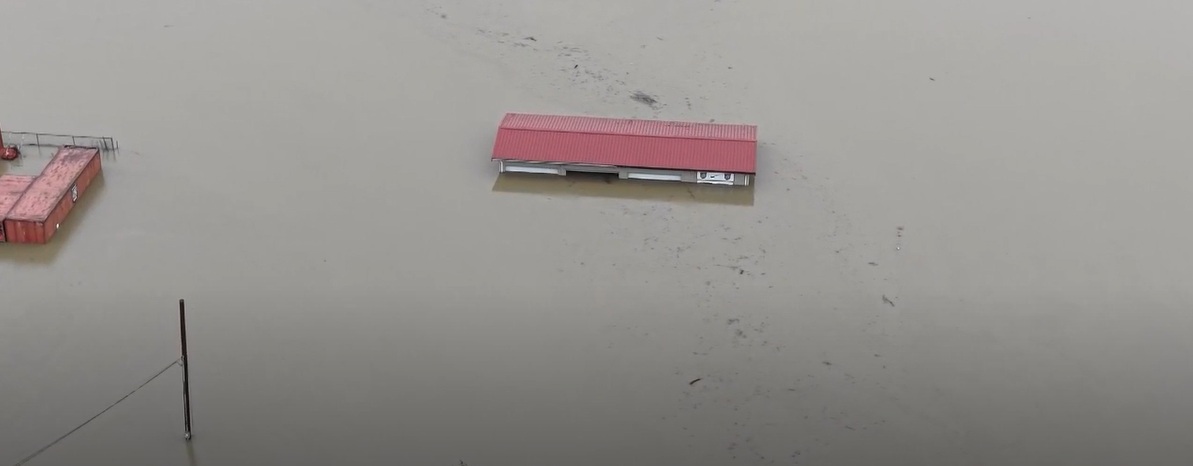
A Week of Catastrophic Flooding in Washington State
By Daniel Brouse -- December 12, 2025
Atmospheric rivers are rapidly increasing in intensity, duration, and frequency as a direct consequence of human-driven climate change. Their behavior is now tightly linked to profound disruptions in the jet stream, the Atlantic Meridional Overturning Circulation (AMOC), and the Pacific Meridional Overturning Circulation (PMOC). These interacting systems are reshaping weather patterns across the United States, particularly in the Pacific Northwest -- where an historic atmospheric river has once again revealed the fragility of our climate-altered world.
A Week of Catastrophic Flooding in Washington State
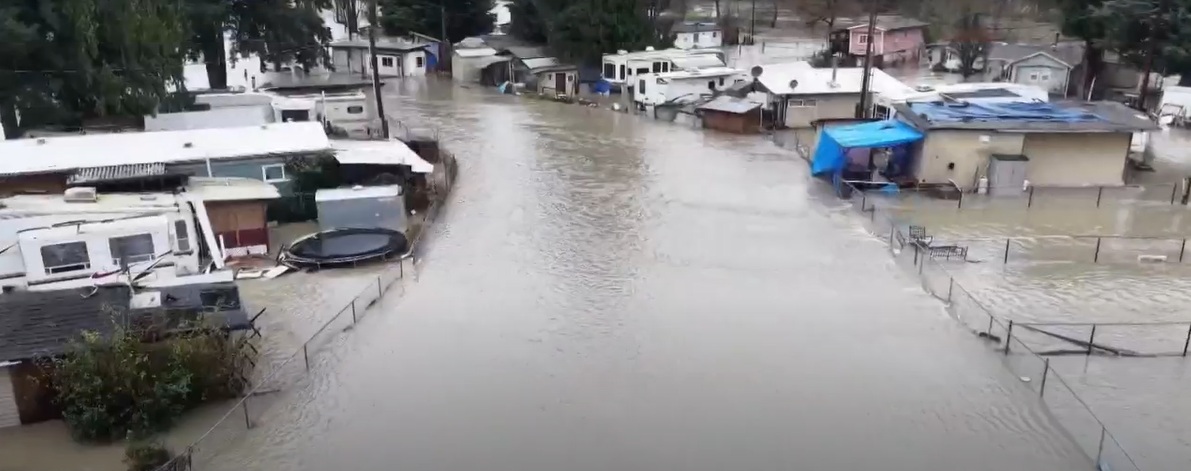
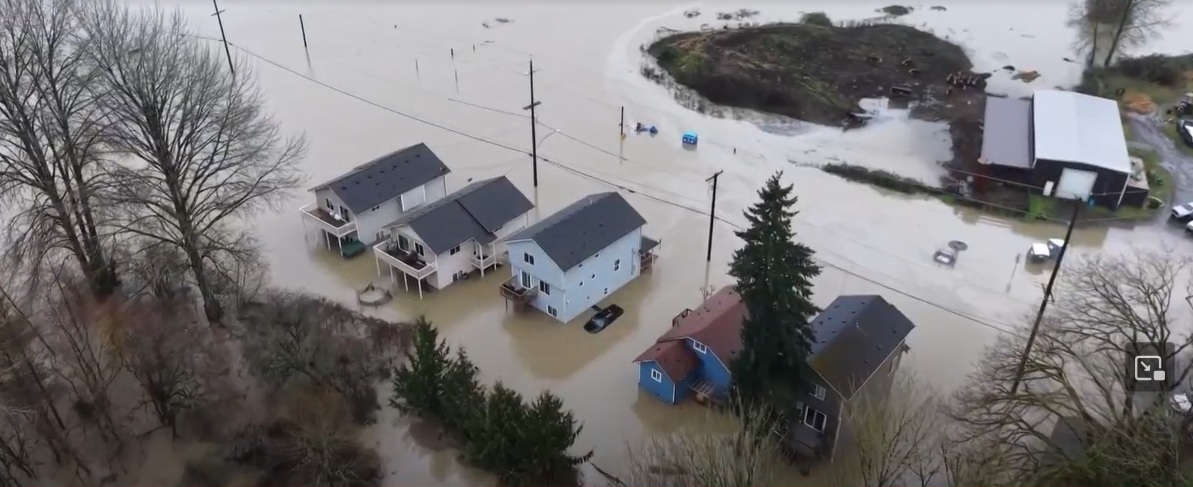
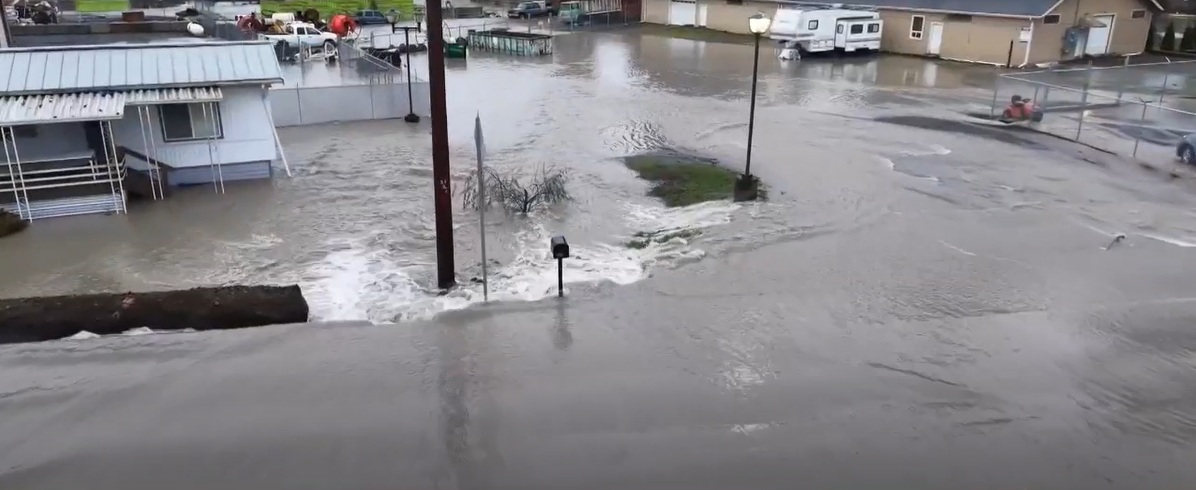
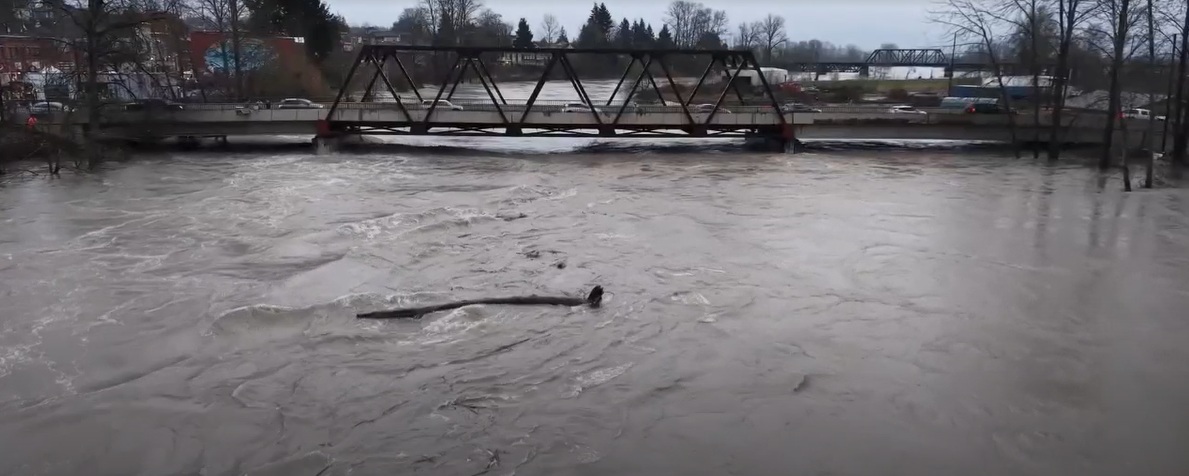
A powerful atmospheric river has drenched Washington state this week, delivering destructive and, in several locations, record-breaking flooding. Emergency declarations, mass evacuations, infrastructure failures, and paralyzed transportation systems underscore how climate-charged storms are overwhelming communities.
Key Impacts
* Record River Levels
Multiple rivers exceeded historical flood crests.
- The Snohomish River set a new all-time flood record.
- The Nooksack River at North Cedarville broke its all-time high.
- The Skagit River is projected to crest at a potentially record height near Mount Vernon.
* Widespread Evacuations
Mandatory evacuations affected an estimated 100,000 residents, including all of Burlington and parts of Mount Vernon.
* Infrastructure Failures
Landslides and rising water forced closures of major highways, including portions of I-90 and U.S. Route 2 over the Cascades.
The Lummi Nation declared a state of emergency as rising waters threatened to isolate the reservation.
* Meteorological Cause
A massive 7,000-mile-long atmospheric river, tapping deep tropical moisture, stalled over the Pacific Northwest. Mountain temperatures were warm enough that precipitation fell as rain -- not snow -- dramatically increasing runoff.
* Ongoing Threat
Even with rainfall easing, rivers remain dangerously swollen, levees are strained, and recovery will take weeks.
Washington Governor Bob Ferguson has declared a statewide emergency and requested federal assistance.
How Climate Change Is Supercharging Atmospheric Rivers
Atmospheric rivers have always been part of Earth's climate system, but human-induced warming is amplifying them. A warmer atmosphere holds more moisture -- roughly 7% more for every 1°C of warming (Clausius-Clapeyron relation) -- which directly increases the intensity of these storms.
1. Increased Moisture and Stronger Storms
* Warmer Pacific waters and higher evaporation rates supply atmospheric rivers with unprecedented moisture loads.
* These enhanced rivers produce far heavier rainfall, greatly increasing flood risk.
2. Changing Trajectories
* As the jet stream becomes more unstable, atmospheric rivers take new and unpredictable paths.
* Regions historically unaffected -- including parts of the U.S. East Coast -- now face rising risk.
3. More Frequent Events
* Once-rare high-intensity atmospheric rivers are becoming commonplace.
* 100-year flood events are occurring every decade or less in some regions.
Jet Stream Destabilization: A Critical Driver
Climate change is profoundly weakening and destabilizing the jet stream -- the fast, high-altitude wind current that governs global weather. This destabilization is driven primarily by Arctic amplification, where the Arctic warms 3-4 times faster than the global average.
What's Happening to the Jet Stream
* Amplification and Slowing
The reduced temperature gradient between the Arctic and mid-latitudes weakens the jet stream, creating larger, slower-moving north-south waves.
* More Stalled Weather Patterns
A weakened jet stream locks weather systems in place:
- heatwaves linger
- cold spells deepen
- storms stall
- atmospheric rivers sit over one region for days
* Increased Blocking Patterns
Persistent high- or low-pressure "blocks" intensify extreme events -- including the kind of prolonged flooding seen this week.
* Disrupted Zonal Flow
The jet's typical west-to-east flow becomes wavier and erratic, redirecting storms into regions unprepared for extreme precipitation.
AMOC, PMOC, and the Wider Climate System
Atmospheric rivers and jet stream disruptions do not occur in isolation. They are part of a rapidly destabilizing climate system where oceanic overturning circulations play a central role.
AMOC Slowdown
The AMOC is weakening as Greenland meltwater reduces salinity in the North Atlantic. Consequences include:
* wetter, stormier winters in the Northeast U.S.
* increased hurricane intensity
* altered jet stream behavior
* higher sea levels along the East Coast
PMOC Changes
The Pacific overturning circulation is also shifting due to warming and altered wind patterns, influencing:
* atmospheric river formation
* heat distribution across the Pacific Basin
* long-term storm tracks
Climate Change and Atmospheric Chaos
Human-induced climate change is not a linear process. It is a nonlinear, dynamic, and chaotic system, governed by interacting subsystems -- atmosphere, ocean, land, and biosphere.
As these subsystems destabilize, they reinforce one another through feedback loops:
* Arctic warming → jet stream weakening
* Jet stream weakening → more stalled atmospheric rivers
* More atmospheric rivers → intensified flooding, erosion, ecological damage
* Ecosystem losses → reduced carbon uptake
* Reduced carbon uptake → faster warming
This is climate amplification -- a positive-feedback cycle.
Modeling the Future: A Chaotic System in Acceleration
Our climate model incorporates chaos theory to account for human impacts within a nonlinear system. The findings are stark:
The most probable global temperature outcome this century is ~3-7°C above pre-industrial levels.
* 3°C → catastrophic flooding, megafires, agricultural destabilization
* 4°C → systemwide collapse of global ecosystems
* 5°C → collapse of food systems and human society
* 6-7°C → entry into long-term Hothouse Earth conditions
These projections align with the accelerating pace of observed change: record heat, record fossil-fuel emissions, record atmospheric CO2, record ice loss -- all occurring simultaneously.
Conclusion: America's Climate Has Already Changed
The Washington disaster is not "bad weather."
It is a preview of an increasingly unstable climate governed by altered jet streams, warming oceans, and atmosphere-saturated moisture transport pathways.
Atmospheric rivers will continue to intensify.
Floods will become more destructive.
And the interacting breakdown of Earth's systems -- jet stream, AMOC, PMOC, cryosphere, biosphere -- is accelerating in ways that now require both emergency adaptation and immediate, large-scale emission reductions.
This is the new era of climate extremes.
And without rapid global action, it will define the century.
* Our probabilistic, ensemble-based climate model -- which incorporates complex socio-economic and ecological feedback loops within a dynamic, nonlinear system -- projects that global temperatures are becoming unsustainable this century. This far exceeds earlier estimates of a 4°C rise over the next thousand years, highlighting a dramatic acceleration in global warming. We are now entering a phase of compound, cascading collapse, where climate, ecological, and societal systems destabilize through interlinked, self-reinforcing feedback loops.
We examine how human activities -- such as deforestation, fossil fuel combustion, mass consumption, industrial agriculture, and land development -- interact with ecological processes like thermal energy redistribution, carbon cycling, hydrological flow, biodiversity loss, and the spread of disease vectors. These interactions do not follow linear cause-and-effect patterns. Instead, they form complex, self-reinforcing feedback loops that can trigger rapid, system-wide transformations -- often abruptly and without warning. Grasping these dynamics is crucial for accurately assessing global risks and developing effective strategies for long-term survival.
What Can I Do?
The single most important action you can take to help address the climate crisis is simple: stop burning fossil fuels. There are numerous actions you can take to contribute to saving the planet. Each person bears the responsibility to minimize pollution, discontinue the use of fossil fuels, reduce consumption, and foster a culture of love and care. The Butterfly Effect illustrates that a small change in one area can lead to significant alterations in conditions anywhere on the globe. Hence, the frequently heard statement that a fluttering butterfly in China can cause a hurricane in the Atlantic. Be a butterfly and affect the world.
The Climate Crisis: Violent Rain | Deadly Humid Heat | Extreme Weather Events | Insurance | Trees Deforestation | Air Pollution | Rising Sea Level | Food and Water | Updates
The Philadelphia Spirit Experiment Publishing Company
These graphics, images, text copy, sights or sounds may not be used without our expressed written consent.