Climate Change in Philadelphia, Southeastern Pennsylvania, and the Mid-Atlantic United States
Climate change represents the greatest systemic and exponentially accelerating risk to the Philadelphia region and its real estate market. The effects are already visible in rising insurance costs and shifting risk assessments. Saltwater intrusion, salinization, ozone formation, polar amplification, hydroclimatic whiplash, and numerous other climate impact indicators are accelerating, placing growing pressure on infrastructure, property values, public health, and regional economic stability.
This is already evident in the insurance market. As climate-related damage accelerates, homeowners insurance will become increasingly difficult to afford or obtain. Florida offers a glimpse of the future, having effectively moved toward government-subsidized insurance as private coverage retreats. For in-depth information, along with additional links and resources, see: Climate Change and Insurance: Costs, Availability, and Sustainability.
The Jersey Shore’s Future: From Floating Casinos to Elevated Beaches
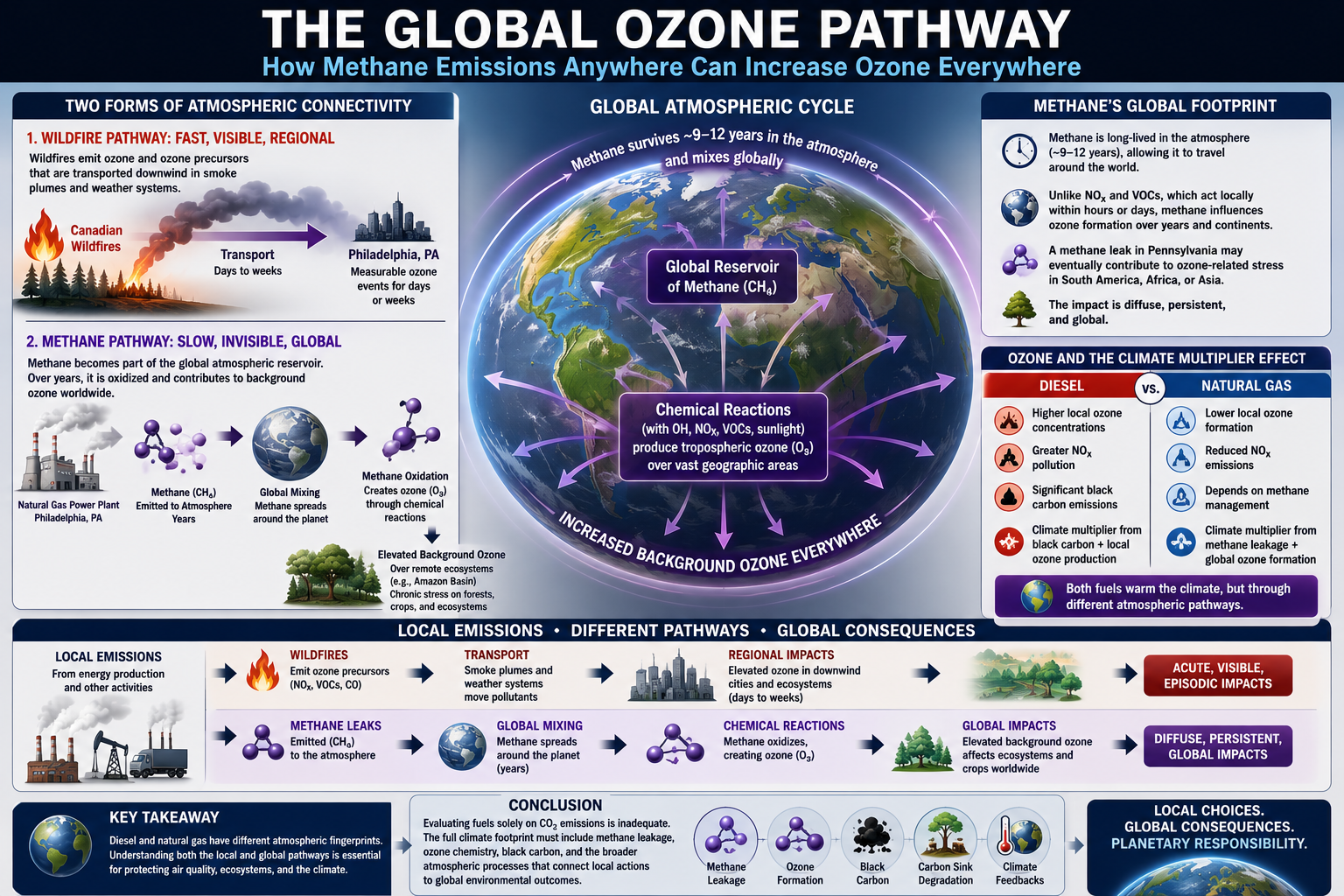
Philadelphia and the Ozone Feedback
This paper examines how wildfires in Canada create dangerous ozone in Philadelphia and how emissions from Philadelphia power generation contribute to ozone formation affecting ecosystems in the Amazon.
Rossby Waves, Climatic Whiplash, and the Nonlinear Destabilization of Atmospheric Circulation
The amplification of Rossby wave patterns and atmospheric instability is contributing to prolonged heat waves, persistent flooding, extended droughts, polar outbreaks, and other compound climate extremes throughout the Philadelphia region.
Accelerating Sea-Level Rise and the Nonlinear Collapse of Mid-Atlantic Farmland
Hydroclimate Whiplash in the Philadelphia Region
Pennsylvania Case Study: Polar Amplification and the Collapse of Climate Stability
The Philadelphia Experiment: Violent Rain
Crossing the Air Quality Threshold
Saltwater Intrusion: The Delaware River Case Study
Plymouth Meeting: Cradle of the Climate Crisis
The Decline of Penn's Sylvania
Pennsylvania’s Forests: A Race to Find Climate-Resilient Species
Brandywine Creek and the New Flood Regime
* Our probabilistic, ensemble-based climate model — which incorporates complex socio-economic and ecological feedback loops within a dynamic, nonlinear system — projects that global temperatures are becoming unsustainable this century. This far exceeds earlier estimates of a 4°C rise over the next thousand years, highlighting a dramatic acceleration in global warming. We are now entering a phase of compound, cascading collapse, where climate, ecological, and societal systems destabilize through interlinked, self-reinforcing feedback loops.
Tipping points and feedback loops drive the acceleration of climate change. When one tipping point is toppled and triggers others, the cascading collapse is known as the Domino Effect.